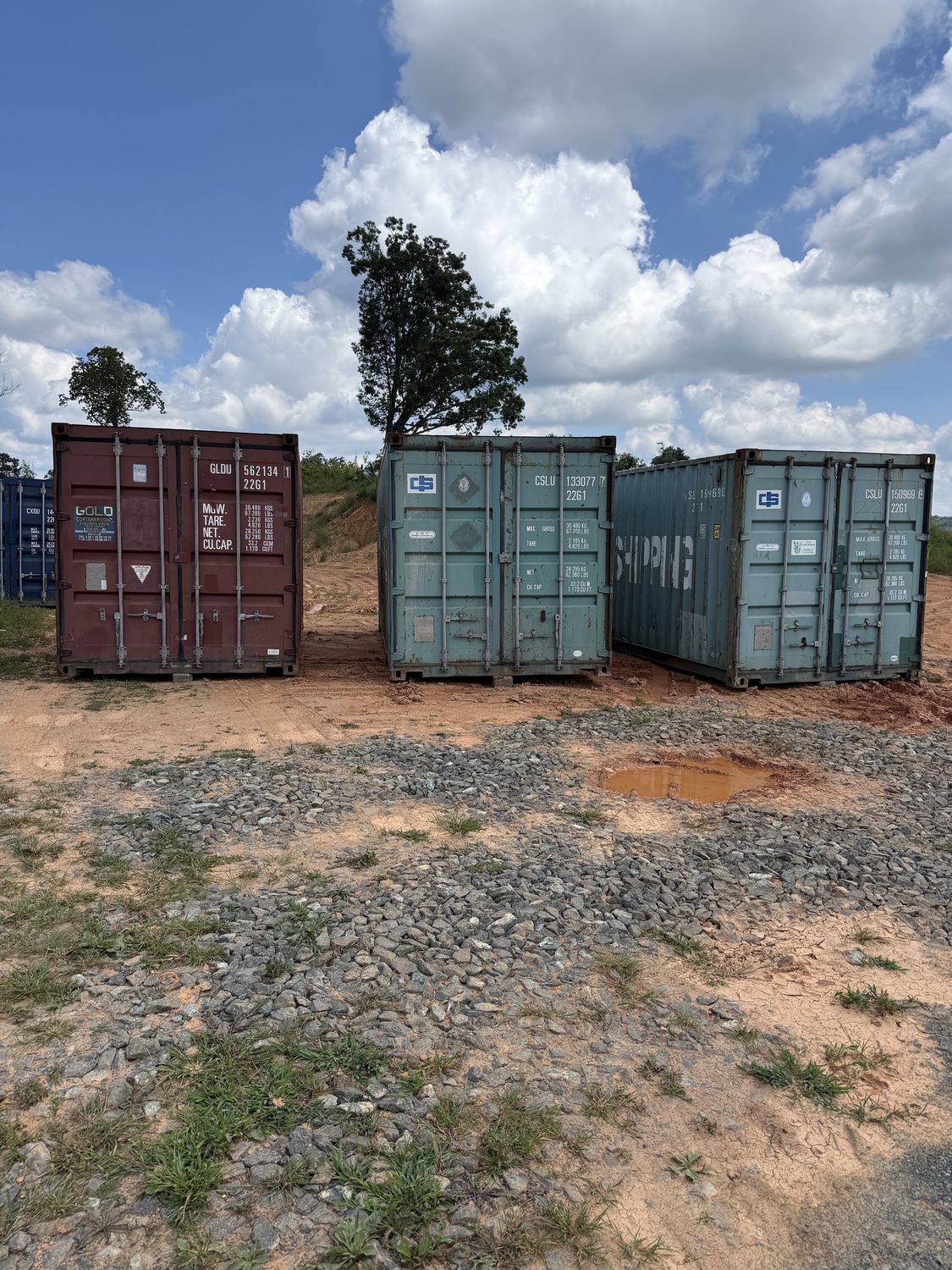
Search for a shipping container around here and a lot of what comes back is not a container company. It is a website. No yard, no address, no steel. You fill in a form, the form gets sold, and somebody calls you from three states away to quote a box nobody in the conversation has laid eyes on.
That is not automatically a scam, and this page is not going to pretend it is. Brokers are a real part of this trade and sometimes one is the right call. But you ought to know which kind of outfit you are dealing with before you send money, because the difference shows up on the day the truck arrives.
There are two kinds of container seller
A yard owns steel. Somebody bought those containers, hauled them onto a lot and is paying to keep them sitting there. You can drive to the lot. The units have numbers on the doors. When a yard sells you a container it is selling one specific box that already exists on its gravel, and it is the one eating the loss if that box turns out to be junk.
A broker owns a phone and a website. It holds no inventory. When you order, the broker finds a container at a depot or a yard somewhere in the region, marks it up, arranges a truck and keeps the difference. A good one is a buyer's agent with a long list of depots. That is a real service and it takes real knowledge of where the steel is.
Then there is a third thing that dresses up as both: the lead site. It is not selling containers. It is selling you. The form is the product. Fill it in and your name goes out to a list of suppliers, sometimes several at once, which is why the phone starts ringing from area codes you do not recognize before you have decided anything.
None of that is illegal or unusual. It matters because a page selling steel and a page selling your phone number look nearly identical on a screen. The tells are elsewhere.
How to tell the difference in about two minutes
You do not have to investigate anybody. All of this is on the website already, and checking it takes less time than the form would have.
- A street address you could drive to. Not a city in the footer, not a PO box, not a line about serving the Southeast. Drop it into a map and switch to satellite. Is there a lot? Is there steel on it?
- Photos of real units on real ground. Weeds, mud, rust streaks, gravel, a forklift in the background. Catalogue renders of a flawless box against a white sky prove nothing. Anybody can buy those.
- A named delivery radius. A yard knows how far its own truck goes and will tell you where the line falls. A site that delivers anywhere in the country does not own a truck.
- A local number a person answers. Call during business hours and ask where the yard is and what is sitting on it today. You will know inside of thirty seconds.
- Willingness to identify the container. Ask which unit you would be buying and whether you can come look at it. Somebody standing in a yard can walk out and read the number off the door.
- A straight answer on who is responsible. If the box arrives with a hole in the roof, who fixes it: the company you paid, or a depot you have never heard of?
Any one of these can have an innocent explanation, and plenty of legitimate small outfits have a thin website. All six missing at once is not an accident.
When a broker is genuinely the right call
Now the fair part, because the anti-broker argument gets overcooked and nobody should decide off a caricature. A broker is a middleman, and a middleman is worth paying when he solves a problem you actually have. Those problems are real:
- You are outside everybody's free zone. Every yard has a radius where its truck makes sense. Past that line you pay for miles no matter who you buy from, and a broker sourcing from a depot closer to you may land the box for less.
- You need something nobody near you stocks. Reefers, 45-footers, open-tops, side-door boxes, ten matching units for one site on one day. A small yard stocks what its customers actually buy.
- You are buying across several states. One purchase order through one broker beats calling nine yards and reconciling nine invoices.
- There is no yard near you at all. Some regions really do not have one, and a middleman with a truck beats nothing.
In those cases the markup buys you reach, sourcing and one number to call when something goes sideways. That is worth money, and most brokers are doing a logistics job that is harder than it looks.
The problem is not that brokers exist. It is paying a middleman for a problem you do not have. If a yard forty minutes away has the box sitting on gravel already, the middle adds a markup, a layer of hand-offs and a stranger between you and the steel, and adds nothing back.
Where the extra layer actually costs you
The costs are rarely dramatic. Nobody runs off with the money. They are friction, and friction lands at the worst moment: the morning the truck shows up.
You buy a description, not a container
Grades are trade terms covering a wide range of steel, and two units wearing the same label can be very different boxes. Somebody who has never stood in front of yours cannot tell you about the dent in the rear panel or the door gasket gone hard. Our guide to container grades explains the words and the inspection checklist is what to look at, but neither helps if the box is four states away and already paid for.
The number can move
Ask what the quote includes and settle it before you pay. Delivery, the tilt-bed truck, the miles past the free zone, blocks to set it level: all real cost, and somebody covers it. It is either inside the number you were told or it turns up later, and you want to know which.
Nobody in the chain has seen your ground
A tilt-bed truck needs roughly 65 feet of straight clearance to slide off a 20-ft container and about 95 feet for a 40-ft, plus room to back in. Somebody who knows these roads asks about that first. A dispatcher working off a pin on a map will not, and a truck that cannot place the box still has to be paid for.
Who is on the hook
This is the one worth thinking hardest about. Buy through a middleman and your seller calls the depot, the depot calls the hauler, and you are last in line to hear anything. Buy from a yard and there is an address you can drive to.
What a yard forty minutes away actually gets you
Here is our side. It is a short list because it is only the things that are true.
You can come look at the steel. The containers we sell sit on gravel at 5567 Elk Horn Rd in Woodlawn, and there is a second sales lot in Wytheville at 2220 E Lee Highway. Come Monday to Friday, 8 to 5. Walk the rows, step inside, pull the doors shut and see how much daylight you find. You end up with a container you have looked at instead of a category off a website.
You talk to the person who sends the truck. One conversation covers what you need, what is on the lot, where it goes and how we get in there. Nothing gets lost between a sales desk and a dispatcher.
The price we quote is the delivered price. Used cargo-worthy 20-ft units start at $3,200 delivered and used 40-ft units start around $4,900 delivered. Rentals start at $165 a month, month to month, no contract. Delivery is free inside 75 road miles of the Woodlawn yard, and the towns are listed on our service area page. Past 75 miles we quote the miles up front, not at the end. Stock changes, so call for what is on the ground: (276) 237-6144.
It arrives delivered and leveled. The box gets set where you want it and blocked level, by people who asked about your access first. That is part of what you bought.
If something is wrong there is a yard you can drive to. That is not a guarantee printed on a page, it is a fact about geography. You can see what we sell on the container sales page, but the honest advice is to come look.
Questions to ask any seller, broker or yard
These work on anybody, us included. Ask them out loud and listen to how fast the answers come. A seller who gets irritated has told you something.
- Where is this container sitting right now? A yard names its lot, a broker names a depot and a city. Either is fine. Vague is not.
- Can I come see it before it goes on the truck? If not, ask why not.
- What grade is it, and what does that word mean to you? Make them define it instead of accepting the label.
- Is that price delivered, to my address? Get the total in writing, including miles past the free zone, before money moves.
- Who owns the truck? Whoever that turns out to be is who you are trusting to get down your driveway.
- Will it be set level, and on what? Blocks under the corners are normal. Find out whether they are included.
- If it shows up damaged or the doors bind, who fixes it and how fast? Ask for the process, not a reassurance.
- Who am I paying, and whose name is on the invoice? It should match the name on the website.
Write the answers down, then call one more place and ask the same eight. Twenty minutes of that teaches you more than any amount of reading, this page included.
One more piece of plain advice: do not wire a deposit anywhere until you have confirmed there is a physical business behind the website. That catches most of what goes wrong here.
How we answer those same questions
Fair is fair, so here are ours, in the same order.
The containers are at the yard on Elk Horn Rd in Woodlawn and at the sales lot on E Lee Highway in Wytheville. Yes, come see it, Monday to Friday, 8 to 5. We will tell you the grade and then walk you around the unit so the word does not carry the whole load. The price is delivered and set level inside 75 road miles, and past that you get the number before you agree to it. We deliver into Virginia, West Virginia and North Carolina ourselves, so the person who asks about your access is responsible for it. If a box shows up wrong you call the same number you called the first time, and there is a lot you can drive to.
We are small and family run, and we will not be the right answer for everybody. If you are three hundred miles out, or need a reefer, or want ten 45-footers on four jobsites next Tuesday, a broker fits that job better and we will say so on the phone.
If you are within a couple of hours of Woodlawn and would rather buy a container you have stood inside of, call (276) 237-6144 or email sales@containersdelivered.com. Tell us the size, the ground it is going on and how tight the access is. Our buying guide covers the rest of the decisions in order.